

Comparison
AEO vs GEO: what is actually different, and what is the same
AEO vs GEO is mostly a naming debate: answer engine optimization and generative engine optimization describe overlapping work aimed at getting a brand cited in AI answers. This post is for marketing leads who keep seeing both labels in proposals; it shows where the terms differ in emphasis, where they are identical, and how to plan and measure the work without paying twice.
Get a free AEO visibility check
Two lines is enough. A specialist replies within one business day.
Quick answer
What is the difference between AEO and GEO?
In the AEO vs GEO debate, AEO (answer engine optimization) emphasizes being the direct answer to a question in any engine, while GEO (generative engine optimization) emphasizes being cited inside AI-written responses from ChatGPT, Gemini, Perplexity or AI Overviews. The tactics overlap almost entirely: crawlable pages, clear answers, consistent entities and third-party mentions.
- AEO and GEO describe the same goal with a different emphasis, not two disciplines.
- Google says optimizing for generative AI search is still SEO.
- Both depend on crawler access, answer-first content, entity consistency and mentions.
- Measure one set of metrics: citation share, mentions and AI referral traffic.
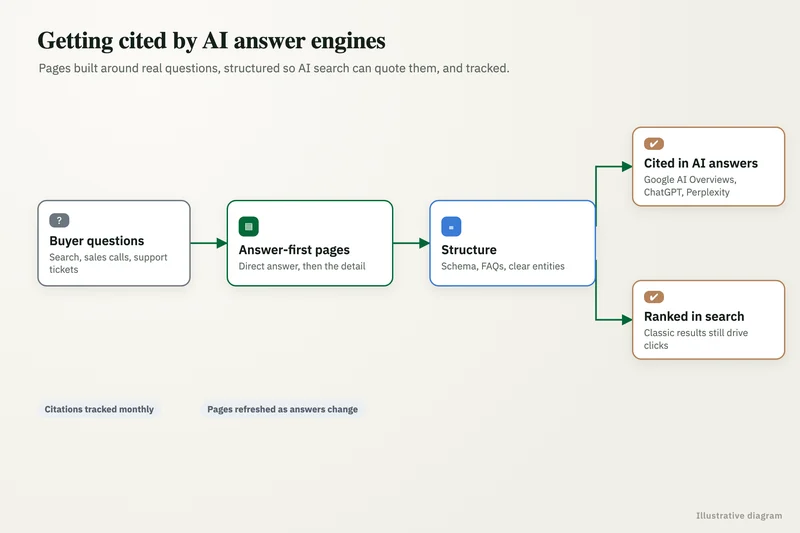
What is the difference between AEO and GEO?
AEO is about answering questions so clearly that an engine uses your page as the answer, and GEO is about being one of the sources a generative model draws on when it writes a response. The difference is emphasis, not method.
AEO's vocabulary is about questions, direct answers and FAQ blocks, because it starts from the query a person types or speaks. GEO's vocabulary is about citations, mentions and how a model summarizes a brand, because it starts from the response a model writes. In 2026 both labels point at the same surfaces: Google AI Overviews and AI Mode, ChatGPT, Perplexity, Copilot, Gemini and Claude.
AEO vs GEO: how do they compare side by side?
Laid out next to each other, the two terms share almost every row. The table separates the genuine differences in emphasis from the work that is identical, and adds SEO for reference.
| AEO | GEO | SEO | |
|---|---|---|---|
| Core question | Are we the answer to this question? | Are we cited or named in AI-written responses? | Do we rank in the results list? |
| Typical surfaces | AI Overviews, AI Mode, featured answers, assistants | ChatGPT, Perplexity, Gemini, Copilot, AI Overviews | Google and Bing organic results |
| Content emphasis | Question H2s, 1-2 sentence answers, FAQ blocks | Original data, quotable claims, comparison pages | Topic coverage, intent match, internal links |
| Off-site emphasis | Consistent entity facts | Mentions on Reddit, YouTube, reviews, press | Backlinks |
| Main metric | Answer and citation share on a prompt set | Citation share and brand mentions | Rankings, clicks |
| Shared foundation | Crawlable, indexed, snippet-eligible pages | Same | Same |
Why do agencies use both names?
Because buyers search for both, and no standards body owns either term. The labels are marketing categories, not certified disciplines, so the same service is sold under each.
Search results show the split. A search tool check on 17 October 2026 found explainers and best-of lists ranking for both "aeo agency" and "geo agency", with very few actual service pages for either. Some agencies add LLMO or AI SEO as further labels. When you compare proposals, ignore the acronym and read the scope: which engines, which deliverables, which metrics and what happens each month.
A useful test is to ask an agency to show the AEO vs GEO split in its own deliverables. If the crawler audit, content rewrites, entity fixes and tracking are the same under both headings, you are looking at one service with two names, which is fine, as long as you are only paying for it once.
Is GEO just SEO with a new name?
Largely, yes, and Google says so about its own products. Its AI optimization guide, updated 10 July 2026, states that optimizing for generative AI search "is still SEO".
The same guide says no special files, markup or Markdown are needed, there is no requirement to split content into tiny pieces, and structured data is not required for generative AI search, though it remains useful for general SEO. To appear in AI Overviews or AI Mode, a page only needs to be indexed and eligible to show a snippet. What GEO and AEO add on top is the off-site and measurement work that classic SEO often skipped: brand mentions, entity consistency across platforms, and tracking citations rather than rankings.
Do AEO and GEO need different tactics?
No. The tactics are shared, and a plan that splits them into two workstreams usually duplicates effort. What changes is which engines you prioritize and which page types you build first.
Ranking alone does not carry a brand into AI answers. Ahrefs found that 38% of AI Overview citations come from the top 10 organic results, down from 76% a year earlier. Its study of 75,000 brands found web mentions correlate 0.664 with AI Overview visibility against 0.218 for backlinks. Both AEO and GEO therefore reach beyond your own site.
The one real difference is sequencing. A site with weak crawler access or thin answer pages gets more from the AEO-flavored work first, because nothing downstream helps if engines cannot read the page. A site with solid pages but few third-party mentions gets more from the GEO-flavored work first, because the engines already understand the content and need corroboration from sources they trust.
- Access: allow OAI-SearchBot, PerplexityBot, Claude-SearchBot, Bingbot and Googlebot in robots.txt and in Cloudflare.
- Answers: put a direct 1-2 sentence answer under each question H2, with a visible last-updated date.
- Entities: keep Organization schema, sameAs links, Wikipedia, G2 or Google Business Profile facts consistent.
- Mentions: earn coverage on Reddit, YouTube, LinkedIn, review sites and the lists your buyers read.
- Evidence: publish original data and comparison tables that other pages want to quote.
How do you measure AEO and GEO results?
Measure both with the same three numbers: citation share on a fixed prompt set, brand mentions in answers, and AI referral traffic. Separate dashboards for AEO and GEO only hide the fact that they move together.
First-party data comes from Google Search Console, where AI feature traffic is counted under the Web search type and a generative AI performance report was added in June 2026, and from Bing Webmaster Tools AI Performance, which reports Copilot citations and citation share. GA4 shows sessions from chatgpt.com, perplexity.ai, copilot.microsoft.com and gemini.google.com. A prompt tracker covers the engines that publish nothing.
Keep the prompt set fixed for at least a quarter and split it by intent: definitions, how-to questions, comparisons and shortlist prompts such as "best X for Y". The AEO vs GEO emphasis then shows up naturally in the data. Question prompts tend to reward answer pages on your own site, while shortlist prompts tend to reward lists, reviews and forums that mention you.
Where does LLMO fit between AEO and GEO?
LLMO, large language model optimization, is the third label, and it leans toward how a model describes your brand even when no web search runs. It overlaps with GEO but adds training-data questions.
For example, GPTBot, ClaudeBot and Google-Extended control whether content is used for model training, while OAI-SearchBot, Claude-SearchBot and Googlebot govern search visibility. An LLMO plan cares about both; most AEO and GEO plans care mainly about the second. Our post on LLMO covers that distinction in detail.
Which should you prioritize, AEO or GEO?
Prioritize by where your buyers ask, not by acronym. If they search Google for how-to and comparison questions, the AEO emphasis on question pages and AI Overviews comes first. If they ask ChatGPT or Perplexity for shortlists, the GEO emphasis on third-party mentions and citable data comes first.
Seer Interactive found brands cited in an AI Overview earned 35% more organic clicks and 91% more paid clicks than those that were not, so being the cited source matters on Google too. A B2B software company usually needs both: answer pages for evaluation questions and mentions on G2, Capterra and comparison lists for shortlist prompts.
Local businesses sit at the AEO end, because Google Business Profile, reviews and clear service pages answer most of their buyers' questions. Ecommerce brands sit in between, needing clean product pages and feeds as well as coverage on retailer sites, Reddit and YouTube.
How do we handle AEO and GEO together?
We run them as one program. AEO Services Agency is the AEO and GEO practice of Greenwolf Tech Labs, and every engagement starts with a free AEO visibility check, then a fixed price for the agreed scope.
We baseline a fixed prompt set across the engines that matter to you, fix crawler access and SEO foundations first, then restructure key pages, tighten entity facts and work on mentions. The same prompt set is re-run after changes, so you see whether citation share moved, whatever name the work goes by. No one can promise a citation, and we say so in writing.
FAQ
Frequently asked questions
Is AEO or GEO better for my business?
Neither is better, because they are two names for overlapping work. Choose the emphasis by where your buyers ask questions: Google AI Overviews favor question-led pages, while ChatGPT and Perplexity shortlists depend more on third-party mentions and citable data.
Does GEO replace SEO?
No. Google's AI optimization guide says optimizing for generative AI search is still SEO, and a page must be indexed and snippet-eligible to appear in AI Overviews. GEO adds mention building and citation tracking on top of SEO foundations.
What does AEO stand for in marketing?
In marketing, AEO stands for answer engine optimization, the practice of making content the answer that AI search tools and assistants quote. It is unrelated to the customs term Authorized Economic Operator, which shares the acronym.
Do I need separate AEO and GEO agencies?
No. Splitting the work between two agencies usually means paying twice for the same crawler fixes, content changes and tracking. One team with one prompt set and one report is simpler and easier to hold to account.
What metrics show AEO and GEO are working?
Citation share on a fixed prompt set, the number of answers that mention your brand, and AI referral sessions in GA4 are the core metrics. Bing Webmaster Tools AI Performance and Search Console's generative AI report add first-party citation and click data.
Is AEO vs GEO a real distinction or marketing?
Mostly marketing. Both terms describe getting a brand cited or named in AI answers, and they share the same foundations of crawler access, answer-first content, consistent entity data and third-party mentions. The useful distinction is which engines and prompt types you prioritize, not which acronym is on the proposal.
Keep reading
Related pages
Get started
Find out what AI says about you
Send your website and three questions your buyers ask. Within one business day we reply with how ChatGPT, Google AI Overviews and Perplexity answer them today, who they cite instead of you, and a fixed-price plan.
- Free AEO visibility check
- Fixed quote before any work starts
- Measured on citations and AI referrals, not promises
Prefer email? info@aeoservicesagency.com
Get a free AEO visibility check
Two lines is enough to start.